
How Can a Railroad Square or Downtown Santa Rosa Small Business Use Google Ads and Local SEO Together to Dominate Nearby Searches?
Sep
How Can a Railroad Square or Downtown Santa Rosa Small Business Use Google Ads and Local SEO Together to Dominate Nearby Searches?
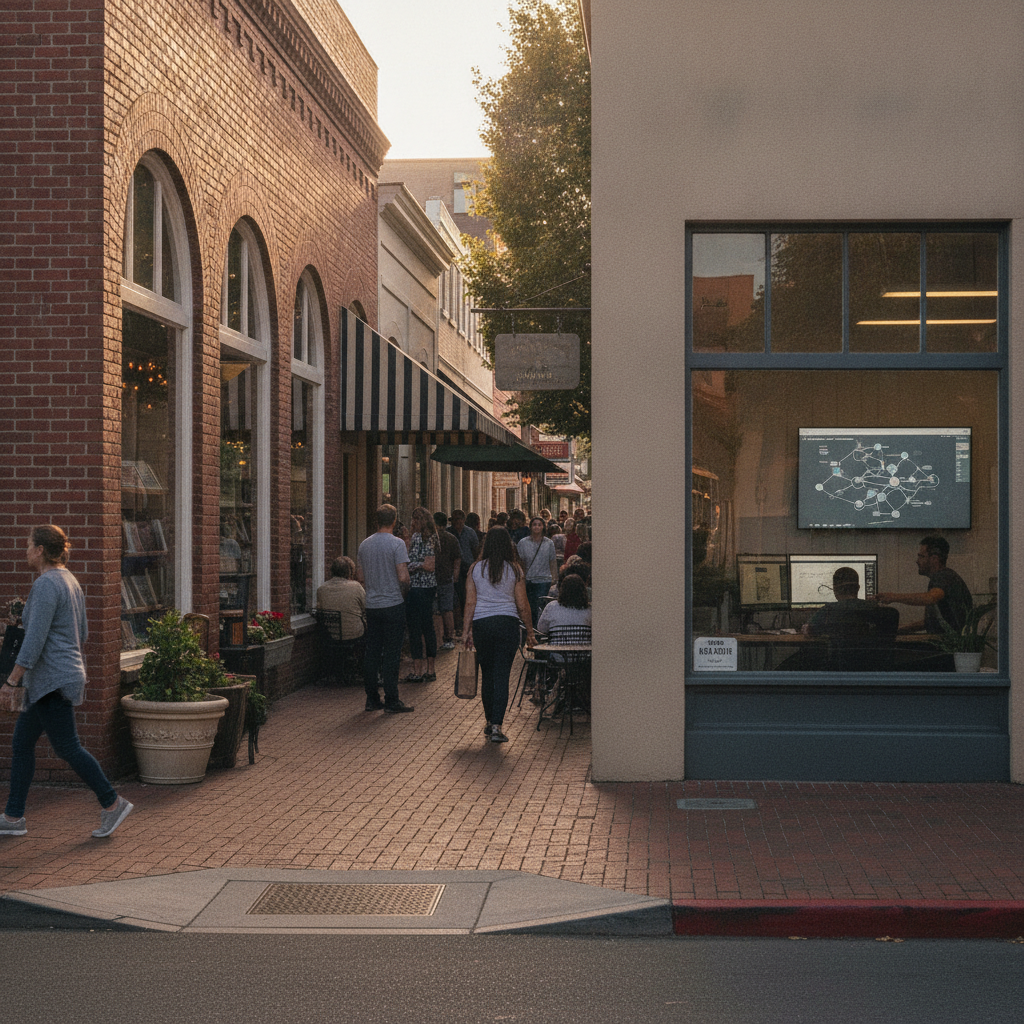
If you have a shop, studio, restaurant, or service business in Railroad Square or Downtown Santa Rosa, you’re already in one of the most naturally discoverable corridors in the North Bay. Visitors rolling in off Highway 101, Bay Area weekenders hunting for wine country charm, SMART rail commuters stopping before or after work — the foot traffic is real. The problem is that most of it starts with a Google search before anyone even steps out of the car. And if you’re not showing up at the top of those results, you’re handing those customers to whoever is.
The good news: combining Google Ads with solid local SEO is one of the most effective one-two punches a small business can run — and it’s especially powerful in a walkable, high-intent area like Downtown Santa Rosa. Here’s how to think about it, what to expect, and why running both together beats either strategy alone.
Why One Without the Other Leaves Money on the Table
Local SEO builds the long-term foundation — your Google Business Profile rankings, your organic search visibility, your map pack presence. It’s what gets you found six months from now without paying per click. But it takes time. If your business is newer, recently moved, or just never invested in SEO, you could be waiting a year or more to climb to page one organically for competitive terms in Santa Rosa.
Google Ads fills that gap immediately. You can be at the top of search results tomorrow for “boutique near Railroad Square” or “downtown Santa Rosa gift shop open Sunday” — but the moment you stop paying, you disappear. There’s no equity built. No map pack presence. No reviews accumulating. Just paid visibility that ends when the budget does.
Running them together is where it gets interesting. Your ads cover your high-value keywords right now while your SEO work compounds in the background. Over time, you start winning organic positions — and you can reallocate ad spend toward seasonal pushes, new services, or competitor terms instead of just covering the basics. That’s how a small business in Downtown Santa Rosa can actually compete with bigger brands that have deeper pockets.
What Local SEO Actually Means for a Downtown Santa Rosa Business
“Local SEO” gets thrown around constantly — but for a business in Railroad Square or along 4th Street, it means some very specific things. It starts with your Google Business Profile being fully optimized: accurate hours (including holiday hours, because visitors plan around those), photos that actually show your space and products, a keyword-rich description that mentions your neighborhood and what you do, and a steady stream of real customer reviews with responses from you.
Beyond that, it means your website has location-specific pages or content that tells Google exactly where you are and who you serve. A store on Wilson Street with a website that only says “Santa Rosa” in the footer — no neighborhood mentions, no schema markup, no locally relevant content — is leaving serious ranking potential unused. Your competitors in Petaluma and Healdsburg are doing the same thing, and the businesses that get specific win.
It also means building citations — consistent mentions of your name, address, and phone number across Yelp, TripAdvisor, local directories, and Sonoma County-specific sites. Inconsistent listings confuse Google and suppress your map pack rankings. This is unglamorous work, but it matters more than most business owners realize. Local SEO packages that include citation cleanup can make a noticeable difference within 60 to 90 days.
How Google Ads Should Work for a High-Foot-Traffic Downtown Location
Here’s something most agencies don’t talk about clearly enough: for a downtown or walkable district business, Google Ads should be heavily weighted toward mobile, location-specific searches with strong buying intent. Someone typing “coffee shop near Railroad Square” on their phone at 9am on a Saturday is not browsing — they’re about to spend money somewhere. That’s the search you want to own.
That means your Google Ads setup needs to be intentional about a few things. First, use location extensions so your address and a call button appear directly in the ad — don’t make someone click through to find you. Second, use ad scheduling to concentrate spend during your peak hours and peak days. A boutique in Downtown Santa Rosa that’s busiest Thursday through Sunday doesn’t need to burn budget on Tuesday at 2pm. Third, write ad copy that’s specific to your neighborhood and what makes you different — not generic copy that could be any shop anywhere in Sonoma County.
What should a small Downtown Santa Rosa business expect to spend? Realistically, a modest local campaign runs between $500 and $1,500 per month in ad spend, depending on how competitive your category is. Retail, restaurants, and personal services in downtown areas tend to have more manageable click costs than, say, legal or medical services. The key is not underfunding it — a $200 monthly budget in a competitive area often produces too little data to optimize effectively. Working with a Google Ads manager who knows Sonoma County search behavior makes a real difference in how far that budget goes.
The Gap Most Agencies Miss: Seasonal Strategy for Downtown Businesses
One thing that’s almost entirely absent from what most local agencies talk about — and this is a real gap — is how to shift your paid and organic strategy with Sonoma County’s tourism seasons. Downtown Santa Rosa and Railroad Square see very different traffic in July and August versus January and February. Wine country visitors flood the area in the fall crush season. Holiday shopping weekends are competitive. Slow winter months are actually a prime time to double down on SEO work and let it compound before the next busy season hits.
A smart strategy for a downtown business accounts for this calendar. Run more aggressive Google Ads during peak tourist months. Use quieter months to clean up your local SEO foundation — update your Google Business Profile, refresh your website content, build out location-specific landing pages, gather reviews. By the time the summer visitors return, you’re ranking organically for terms your competitors are still paying for.
This kind of seasonal thinking is what separates businesses that grow year over year from ones that just scramble to react to each season as it arrives.
Why Generic Agencies Don’t Cut It for a Railroad Square Business
Out-of-area digital agencies — and there are plenty pitching Sonoma County businesses right now — often treat every local market the same. They’ll run cookie-cutter campaigns that ignore the fact that your customer base includes both year-round locals and Bay Area weekenders searching with very different intent. They won’t know that Railroad Square has a distinct neighborhood identity worth calling out in your ad copy. They won’t factor in wildfire recovery history and how that’s shaped local consumer loyalty toward businesses that have stuck around.
Working with a Santa Rosa-based marketing partner who understands the rhythm of this market — the seasonal swings, the local-first culture, the specific search behavior of Sonoma County shoppers — isn’t just a nice-to-have. It’s often the difference between a campaign that generates calls and one that generates reports that look fine but don’t move the needle.
Frequently Asked Questions
How long does it take for local SEO to work for a downtown Santa Rosa business?
Most businesses start seeing meaningful movement in their Google Business Profile and map pack rankings within 60 to 90 days of consistent optimization work. Organic website rankings for competitive terms can take four to six months or longer. That’s exactly why pairing SEO with Google Ads from the start makes sense — ads get you visible now while SEO builds long-term equity.
Do I need a separate landing page for my Downtown Santa Rosa or Railroad Square location?
If you’re running Google Ads, yes — a dedicated landing page that matches your ad’s message and includes your location, hours, and a clear call to action will significantly improve your conversion rate. Sending ad clicks to your homepage is one of the most common and costly mistakes small business owners make with paid search.
Should I run Google Ads year-round or only during busy seasons?
It depends on your margins and category. For most Downtown Santa Rosa businesses, a lighter maintenance budget in slower months with heavier spend during peak tourist season (late spring through fall harvest) tends to produce the best return. Your campaign data from busy months also helps you optimize smarter for the next cycle.
Can a very small business with a limited budget benefit from this combined approach?
Yes — but you have to be realistic about tradeoffs. With a tight budget, prioritize getting your local SEO foundation right first (Google Business Profile, citations, on-page basics) since that produces ongoing free traffic. Layer in Google Ads strategically for your highest-value seasonal windows rather than running a thin campaign all year that never gains traction.
What makes On The Mark Digital different from other agencies pitching Sonoma County businesses?
We’re based right here in Santa Rosa — 703 2nd St, not a call center in another state or an overseas team managing your account remotely. We’ve been working with North Bay small businesses for 28 years and understand the local market, the seasonal rhythms, and what actually drives customers through the door in this area. That context shows up in every campaign we build. Learn more about our Santa Rosa digital marketing services.
Ready to Get Found by More Customers in Downtown Santa Rosa?
Whether you’re just getting started with Google Ads, trying to figure out why your local SEO isn’t moving, or looking for someone who actually knows the Sonoma County market to take the whole thing off your plate — we’d love to talk. Reach out to On The Mark Digital for a free consultation and we’ll take an honest look at where you stand and what’s actually worth doing first. No pressure, no jargon — just a real conversation about your business.