
Does Your Sonoma County Retail Shop Actually Need an eCommerce Website — or Just a Better Local Strategy?
May
Does Your Sonoma County Retail Shop Actually Need an eCommerce Website — or Just a Better Local Strategy?
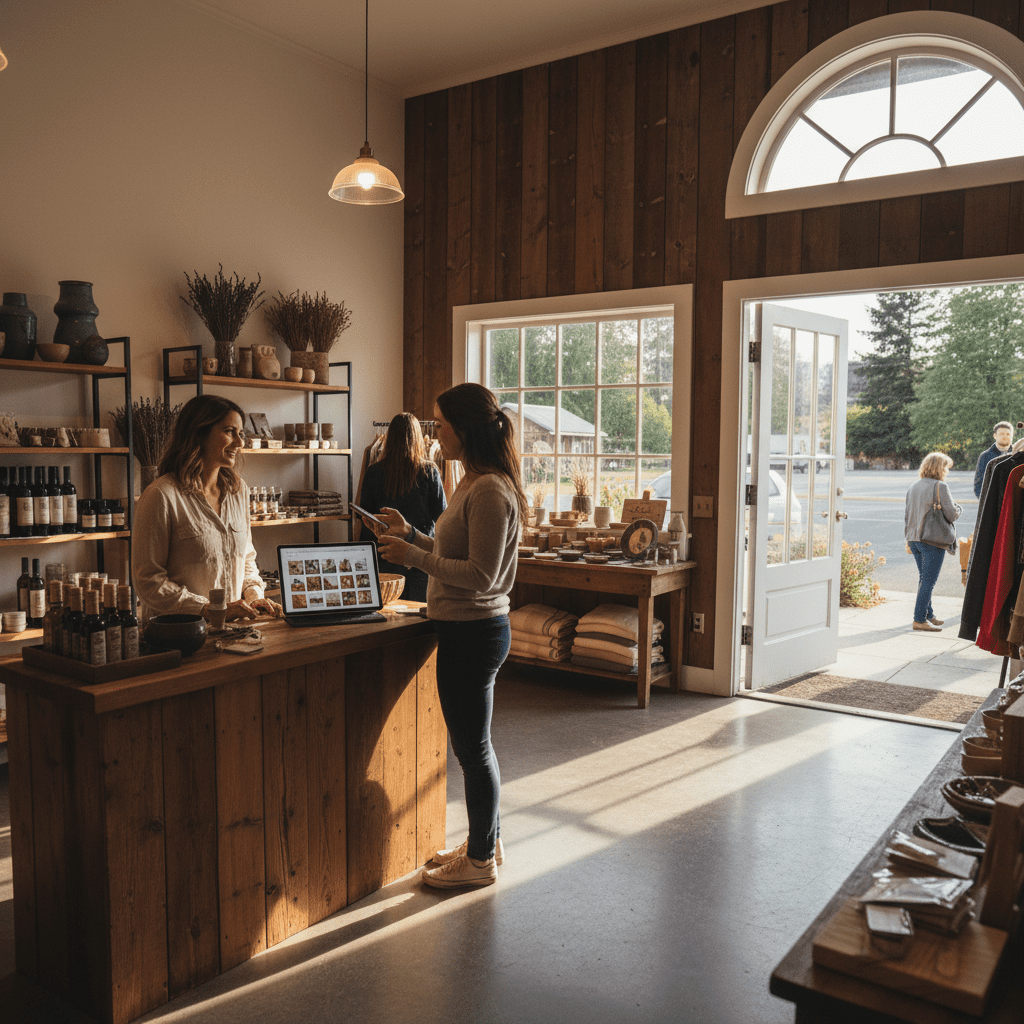
If you run a boutique gift shop in Sebastopol, a home goods store near Santa Rosa’s Montgomery Village, or a specialty food shop somewhere along the Petaluma corridor, someone has probably told you that you need to be selling online. Maybe it was a web developer pitching you a Shopify build. Maybe it was a well-meaning friend who ships products to 40 states from their garage. But here’s the question nobody asks first: does selling online actually make sense for your shop, in your market?
The honest answer is — it depends. And working through that question intelligently can save you thousands of dollars and months of frustration.
The Two Very Different Problems a Website Can Solve for Retailers
Before you decide whether to build out a full online store, it helps to separate two distinct goals that often get lumped together:
- Visibility — Getting found by people who are nearby, searching locally, or planning a trip through Wine Country
- Transactions — Actually selling products to people who may never set foot in your store
Most local retail shops in Sonoma County need the first thing urgently. The second is optional — and sometimes actively counterproductive if it pulls your attention away from what actually drives your revenue: people walking through the door.
A well-built website with strong local SEO, a polished Google Business Profile, clear hours and directions, good product photography, and a compelling story about your shop can dramatically increase foot traffic. That’s not a compromise — that’s often the smarter play for a locally-rooted retailer. You can explore what a professionally designed website looks like for shops at different budget levels.
When eCommerce Actually Makes Sense for a Sonoma County Retailer
There are real situations where building out a transactional online store is worth the investment. You should seriously consider it if:
- You sell products that are genuinely hard to find anywhere else — artisan goods, locally sourced specialty items, handmade gifts
- You already have demand from people outside Sonoma County (Bay Area visitors who want to reorder, tourists who found you and want more)
- Your products ship easily and aren’t prohibitively expensive to pack and send
- You have the staff capacity to manage inventory, fulfillment, and customer service for online orders
- You’re willing to invest in ongoing paid advertising to actually drive traffic to the store — because launching an eCommerce site and waiting for organic sales is not a strategy
Sonoma County has a genuine advantage here. Wine country tourism means your customer base isn’t just local — Bay Area visitors who spend a weekend in Healdsburg or along the Russian River Valley often want to bring the experience home. If you’ve built a recognizable brand and people are already asking “can I order from you?”, an online store starts making real sense.
When eCommerce Will Cost You More Than It Earns
Here’s where most web agencies — including some of the generic national ones that pitch Sonoma County businesses — gloss over the honest tradeoffs. A full eCommerce build isn’t just a one-time cost. It comes with ongoing maintenance, payment processing fees, shipping logistics, photography overhead, returns policies, and the time required to keep product listings current.
For a retail shop with 80 SKUs and two employees, that’s a real operational burden. If your average online order value is $40 and you’re spending three hours a week on fulfillment, it can take a long time to see net positive returns — especially before you factor in the advertising budget you’ll need to drive any meaningful volume of online traffic.
Platforms like Shopify and WooCommerce are both capable tools. But “capable” doesn’t mean “free” or “automatic.” Shopify charges monthly fees that compound over time. WooCommerce (built on WordPress) gives you more control but requires more technical maintenance. Neither platform does the marketing for you.
The Middle Path: A Hybrid Local-First Website
For many Sonoma County retailers, the smartest move isn’t a full eCommerce buildout — it’s a beautifully designed local-first website that does a few specific things really well:
- Ranks well for searches like “gift shop in Sebastopol” or “specialty food store near Santa Rosa”
- Shows your products with enough detail and photography that visitors feel confident walking in
- Integrates with your Google Business Profile so your hours, reviews, and location are always accurate
- Offers a simple “local pickup” option for pre-orders — capturing online intent without the full logistics overhead of nationwide shipping
- Builds your email list so you can market directly to customers when new inventory arrives or a seasonal sale is running
This approach converts browsers into in-store customers rather than trying to compete with Amazon — which, frankly, you don’t need to do. Sonoma County’s strong local-first consumer culture means people want to shop local. Your job is to show up when they’re searching, and make it easy for them to choose you.
A thoughtfully built local SEO strategy combined with a clean, fast-loading website is often the highest-ROI investment a retail shop can make — particularly if your current site was built five or more years ago and isn’t mobile-friendly.
What the Typical Competitor Agencies Miss on This Topic
Most web design agencies serving Sonoma County focus heavily on either “we build beautiful websites” or “we do SEO.” Very few actually walk a retail business owner through the strategic question of whether eCommerce is right for them before selling a $6,000 Shopify build. That’s a real disservice — and it’s something we think about differently after nearly three decades working with local businesses here in Santa Rosa and across the county.
The right answer isn’t always the more expensive one. Sometimes a $3,500 WordPress site with sharp photography, strong local SEO, and a well-optimized Google Business Profile will outperform a $10,000 eCommerce site that nobody’s driving traffic to. Honest guidance on that question is something you should be able to expect from any agency you hire.
What to Ask Any Agency Before You Build
Before you sign a contract for a new website — eCommerce or otherwise — here are the questions worth asking:
- Will this site be optimized for local search from day one, or is SEO a separate add-on?
- How will you drive traffic to my online store after it launches?
- What’s the realistic timeline before I see meaningful online sales?
- What ongoing costs should I budget for after the site is live?
- Can you show me examples of retail clients whose online presence you’ve actually improved?
If an agency can’t answer those clearly, that tells you something important.
Frequently Asked Questions
Do I need a Shopify store if I only want to sell locally in Sonoma County?
Probably not. If your primary goal is to sell to local customers in Santa Rosa, Petaluma, or Sebastopol, a well-optimized local website with a Google Business Profile and strong local SEO will drive more relevant traffic than a Shopify store you’d still have to market separately. Shopify makes more sense when you’re actively targeting buyers outside your immediate area.
How much does a basic local retail website cost vs. a full eCommerce site?
Costs vary widely depending on the agency and scope, but as a general frame: a professional local-first retail website typically starts in the $2,500–$5,000 range, while a full eCommerce buildout with product pages, inventory management, and payment integration often starts around $5,000–$10,000 or more. Ongoing costs differ significantly as well. Always get a clear breakdown of what’s included and what’s billed monthly.
Can I add eCommerce to my existing website later without rebuilding everything?
Often, yes — particularly if your current site is on WordPress or a platform like Wix or Squarespace. WooCommerce can be added to an existing WordPress site with manageable effort. That said, older sites with structural or performance issues may need a rebuild anyway to meet current mobile and speed standards. It’s worth having a developer audit your current site before you decide.
What if I just want to offer local pickup orders online — do I need a full eCommerce platform for that?
Not necessarily. Simple local pickup or pre-order functionality can sometimes be handled with a basic order form or a lightweight booking/payment plugin — without the overhead of a full eCommerce platform. This is often a great starting point for small retailers who want to test online ordering without committing to the full infrastructure.
How do Bay Area tourists factor into my online retail strategy?
More than many local shop owners realize. Wine country visitors who find you during a weekend trip often want to reorder from home. Capturing their email address in-store, running retargeting ads to past visitors, and having a website that’s easy to find after the fact — even if you never ship a single package — can meaningfully extend the value of each tourist customer you acquire in person.
Ready to Figure Out the Right Strategy for Your Shop?
You don’t need to choose between “full eCommerce” and “do nothing online.” There’s a smart middle ground for most Sonoma County retailers — and finding it starts with an honest conversation about your business goals, your customers, and what’s actually worth your time and money.
On The Mark Digital has been helping small businesses in Santa Rosa and across Sonoma County build a smarter online presence for nearly 30 years. We’re not going to sell you a $10,000 website if a $4,000 one will outperform it. Reach out for a free consultation and let’s talk through what makes sense for your shop.