
How Can an Occidental, Forestville, or West Sonoma County Small Business Use eCommerce to Sell Beyond the Local Area?
Jul
How Can an Occidental, Forestville, or West Sonoma County Small Business Use eCommerce to Sell Beyond the Local Area?
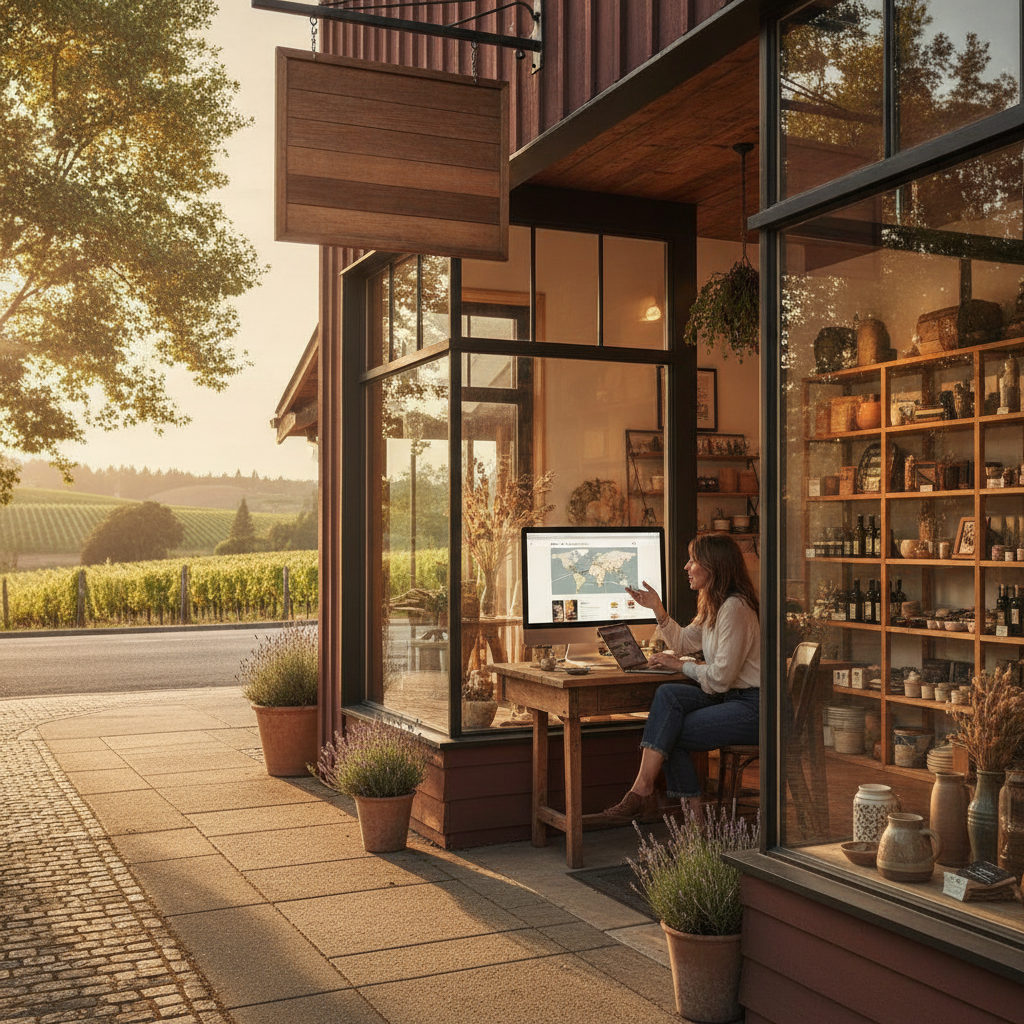
Yes — you absolutely can. If you run a shop, studio, farm stand, or artisan business out in Occidental, Forestville, or anywhere along the winding roads of West Sonoma County, you already know your foot traffic has a ceiling. The tourists roll in on weekends, the locals are loyal, and the Russian River Valley has a magic to it that draws people from across the Bay Area. But what about the other 51 weeks a year? What about the customer in San Francisco or Marin County who discovered you on a weekend drive, bought something, loved it — and has no easy way to come back for more? That’s the gap eCommerce fills. And it’s a gap more West County businesses should be thinking about.
The West County Advantage — and the Problem That Comes With It
There’s something genuinely special about small businesses in this part of Sonoma County. Whether it’s handmade ceramics out of a barn studio in Occidental, small-batch preserves from a Forestville farmstead, or a Guerneville boutique that carries things you can’t find anywhere else on the internet — West County businesses tend to sell things people want to buy again. The trouble is, you’re off the beaten path. You’re not on the Highway 101 corridor. You’re not in downtown Santa Rosa or Sebastopol with the drive-by visibility. For a lot of these businesses, the website is still essentially a digital brochure — hours, directions, maybe a contact form. And that’s a missed opportunity.
Adding eCommerce to your website isn’t just about selling online. It’s about extending your reach beyond whoever happens to be driving down Coleman Valley Road on a Sunday afternoon. Done right, it turns a one-time visitor into a repeat customer — even if they live in Marin County, Napa, or across the state.
WooCommerce vs. Shopify: Which One Makes Sense for a Small West County Business?
This is the question we hear most often, and the honest answer is: it depends on what you’re selling and how hands-on you want to be with your site.
Shopify is purpose-built for selling. It’s fast to set up, handles payments and shipping well out of the box, and has a clean admin interface that most small business owners can navigate without a developer on speed dial. If you’re selling physical products — jams, candles, art prints, clothing, wine country gifts — Shopify is hard to argue against. The monthly fees add up over time, but for most small retailers, the simplicity is worth it.
WooCommerce runs inside WordPress, which means you get more flexibility and ownership over your site. If you already have a WordPress site, or if you want a shop that blends naturally into a larger content-driven website, WooCommerce can be a better long-term fit. It does require more maintenance — plugin updates, hosting decisions, security — so you’ll want to make sure someone’s managing the backend. For businesses that also want to blog, post recipes, share stories about their farm or studio, and build a content strategy alongside their shop, WordPress with WooCommerce gives you a lot of room to grow.
What we’d steer most West County small businesses away from is the template-shop approach — spinning up a basic Squarespace or Wix store and calling it done. Those platforms work fine for simple catalogs, but they tend to underperform on SEO, limit your customization options as you grow, and can make it harder to integrate the kind of local-pickup and delivery logic that matters for a business that still wants to serve the community around it.
Local Pickup and Delivery — Don’t Overlook This
Here’s something that doesn’t get talked about enough in eCommerce guides aimed at small businesses: the local pickup option is a competitive advantage for West County retailers, not just a checkbox. If someone from Sebastopol or Santa Rosa wants to order from you online but doesn’t want to pay for shipping on a jar of honey or a bottle of olive oil, giving them a local pickup option removes the friction entirely. It also keeps the transaction local — which matters in a community that takes “buy local” seriously.
Both Shopify and WooCommerce support local pickup and local delivery configurations. Setting them up correctly — with the right geographic radius, clear instructions, and a good confirmation email flow — is the kind of detail that separates a shop that converts from one that confuses. A well-designed eCommerce site handles these details before a customer ever has to wonder.
Why Generic Platforms and Out-of-Area Agencies Often Miss the Mark
If you’ve ever been pitched by a national eCommerce agency or tried one of those all-in-one “build your store in a day” services, you may have noticed something: they don’t know anything about you, your community, or your customers. They’re optimizing for generic conversion metrics, not for the specific trust signals that matter to someone buying a $45 jar of fermented garlic from a West Sonoma County farm.
Your product photography needs to feel real. Your copy needs to sound like you, not like a fulfillment warehouse. Your store needs to load quickly even for visitors on rural Sonoma County internet connections — which means Core Web Vitals performance actually matters here in a way it might not for a business in a dense urban area. And your checkout experience needs to feel safe and straightforward to someone who found you through an Instagram post or a Google search, not a recommendation from a friend.
These are the details that a local agency with roots in the region — one that knows the Russian River Valley isn’t just a geography but a brand in itself — will handle differently than an agency in another state that’s never been west of 101.
Getting Found in Search — the Part Most eCommerce Sites Skip
Building the store is step one. Getting customers to it is the ongoing work. For West County businesses, there are a few angles worth focusing on:
- Product page SEO: Each product page is an opportunity to rank for something specific. “Fermented hot sauce Sonoma County,” “handmade ceramic mugs Russian River Valley,” “small-batch jam West Sonoma” — these are real searches. Most eCommerce stores leave these pages essentially blank from an SEO perspective.
- Google Business Profile: Even if you’re selling online, keeping your GBP updated with your physical location helps local customers find you — and signals to Google that you’re a real, active business.
- Paid ads for product campaigns: A small Meta Ads or Google Shopping budget can work well for physical products, especially ones with strong visual appeal. Targeted digital advertising lets you reach Bay Area visitors who came to West County once and might buy again — or their friends who’ve never been but are gift shopping.
- Seasonal strategy: If your business is slower in winter, that’s actually a good time to invest in SEO and content so you’re ranking well before the spring and summer tourist wave hits again. Don’t wait until June to think about it.
What to Look for in an eCommerce Partner — Especially Out Here
You want someone who has actually built eCommerce sites for small businesses — not just big brands. Someone who understands the difference between selling artisan goods and selling mass-produced products, and knows that your brand story is part of the product. Ask any agency you’re considering: Can I see eCommerce sites you’ve built for small retail businesses? What platform did you use and why? If they can’t walk you through the reasoning, that’s a sign.
Also ask about ongoing support. An eCommerce site isn’t a set-it-and-forget-it project. Inventory management, shipping rate updates, seasonal promotions, product photography needs — these things evolve. You want a partner who’s available when something breaks or when you want to add a new product line, not one who disappears after launch.
At On The Mark Digital, we’ve been working with small businesses across Sonoma County for 28 years. We know what sells in Wine Country, we understand the seasonal rhythms of West County tourism, and we build eCommerce sites that are designed to convert — not just exist. Whether you’re in Occidental, Forestville, or anywhere in between, we’d love to talk through what an online store could look like for your specific business.
Frequently Asked Questions
What does it cost to add eCommerce to an existing small business website?
It varies widely depending on your platform, the number of products, and how much custom work is needed. A basic WooCommerce or Shopify integration on an existing site can start in the low thousands; a fully custom build with inventory management, local pickup logic, and SEO-optimized product pages will be more. A good agency will scope it based on your actual needs — not a one-size template.
Do I need a separate website for my online store, or can it live on my existing site?
In most cases, integrating the store into your existing site is the right move. It keeps your brand cohesive, consolidates your SEO authority, and makes for a better customer experience. A separate domain for your shop is rarely necessary for a small West County business.
How do I handle shipping from a rural West Sonoma County location?
Most small businesses in this area use USPS, UPS, or FedEx for outbound shipping. Both Shopify and WooCommerce integrate with real-time carrier rate calculators so you’re not under- or over-charging for shipping. For fragile or perishable items — like food products common in West County — you’ll want to think carefully about packaging and ship-day scheduling, especially in summer heat.
Can I sell wine or other alcohol through an eCommerce site?
Wine eCommerce in California has its own licensing and compliance requirements — you’ll need a direct-to-consumer shipping license and to comply with recipient state laws. It’s doable, and many small Sonoma County wineries do it successfully, but it’s not a plug-in-and-go situation. We can help you think through the technical setup once you have the legal side handled.
Will an online store hurt the local, handcrafted feel of my brand?
Only if it’s built without intention. A well-designed eCommerce site can actually strengthen your brand story — good photography, authentic copy, and a checkout experience that feels personal rather than transactional. Plenty of West County artisans and makers have built successful online businesses without sacrificing what makes them special. The key is working with someone who gets it.
Ready to talk about what eCommerce could look like for your West Sonoma County business? Reach out to On The Mark Digital for a free consultation — no hard sell, just an honest conversation about what makes sense for where you are right now.