
How Can a Petaluma or Sonoma County Small Business Use Landing Pages to Turn Paid Ad Clicks Into Actual Customers?
Oct
How Can a Petaluma or Sonoma County Small Business Use Landing Pages to Turn Paid Ad Clicks Into Actual Customers?
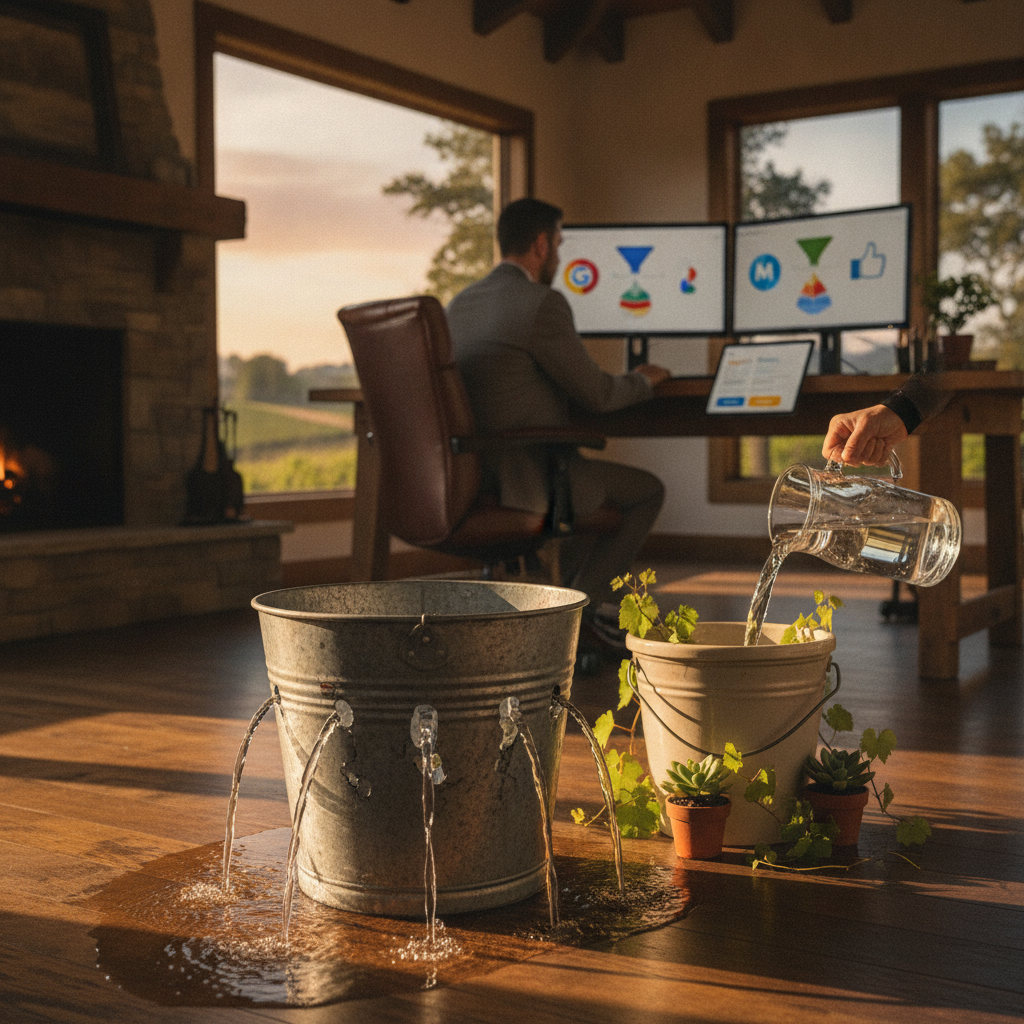
If you’re running Google Ads or Meta Ads and sending people straight to your homepage, you’re almost certainly wasting a significant chunk of your budget — and you probably don’t even know it. For small businesses in Petaluma, Rohnert Park, Windsor, and across Sonoma County, the difference between a paid ad campaign that breaks even and one that actually generates new customers often comes down to one thing: where the click lands. A well-built, purpose-driven landing page can double or even triple the leads you get from the same ad spend. Here’s what you need to know.
Why Your Homepage Is Costing You Money
Your homepage is designed to tell your whole story — who you are, what you offer, where you’re located, maybe a little history, your team, your services. That’s exactly what it should do for someone discovering you organically. But a paid ad visitor is different. They clicked on a specific promise. If you’re running a Google Ad for “HVAC repair Petaluma” and the click drops them on a homepage cluttered with navigation menus, multiple service categories, and a slideshow carousel from 2019, they’re gone within seconds.
Landing pages exist to solve exactly this problem. A landing page is a standalone page — separate from your main site navigation — that matches the specific message in your ad and has exactly one goal: get the visitor to take one action. Call you. Book an appointment. Fill out a quote form. Request a free consultation. That’s it. No distractions, no rabbit holes, no “while you’re here, check out our blog.”
What Makes a Landing Page Actually Work for a Local Business
There’s a lot of generic advice floating around about landing pages — keep it above the fold, use a strong call to action, blah blah. Let’s get more specific about what actually moves the needle for a Sonoma County small business.
Match the Message to the Ad
If your ad says “Free Roof Inspection for Windsor and Santa Rosa Homeowners,” your landing page headline should say something almost identical. This is called message match, and it’s one of the most important — and most overlooked — conversion principles. When the headline matches the ad, visitors feel like they landed in the right place. When there’s a mismatch, even a small one, they second-guess themselves and bounce.
One Offer, One Button
Resist the temptation to promote three different services on one landing page. Pick one offer, one action, and build the whole page around it. If you run a day spa in Cotati and you’re advertising a spring facial promotion, the page should be exclusively about that promotion — with a single “Book Now” button that appears multiple times as the visitor scrolls. Not links to your other services, not your Instagram feed, not a popup asking for their email before they’ve even read anything.
Local Trust Signals Matter Here More Than You Think
Sonoma County has a strong local-first consumer culture. People here genuinely prefer to buy from businesses rooted in the community — not franchises or out-of-area companies with a local phone number slapped on a generic website. Your landing page should lean into that. Use real photos of your actual location, your team, your work — not stock photos of smiling strangers. Include Google reviews from local customers. If you’ve served families in Rohnert Park for 15 years, say so. That kind of specificity builds trust faster than any slick design element.
The Landing Page vs. Homepage Mistake Most Competitors Never Explain
Here’s a gap that most local marketing agencies in Sonoma County don’t address clearly: the technical and strategic difference between a landing page and a website page. Many business owners assume that a well-designed website page serves the same purpose. It doesn’t — and the reason comes down to navigation.
When a visitor lands on a standard website page, they have your full navigation menu available. Every link is an exit ramp. Studies consistently show that removing navigation from a landing page increases conversion rates — sometimes dramatically. A dedicated landing page strips all of that away. The visitor can scroll down, read your offer, and click your call-to-action button. That’s their only option. That constraint isn’t rude — it’s respectful of their time and your ad budget.
If you’re spending $500–$2,000 a month on Google or Meta Ads (which is a realistic range for many Sonoma County small businesses), and your conversion rate is 1–2% because you’re sending clicks to a homepage, a proper landing page could push that to 4–8%. On $1,000 of ad spend, that’s the difference between 10 leads and 40 leads. Same budget. Very different result. You can explore how we approach this on our sales funnels and landing pages page.
Seasonal Angles That Make Landing Pages Even More Effective in Wine Country
One underused strategy for Sonoma County businesses is building seasonal landing pages that align with local traffic patterns. Wine country tourism peaks hard in summer and fall — Bay Area visitors flood up Highway 101 on weekends from July through November, and businesses from Petaluma all the way up to Windsor feel it. If you’re a restaurant, a winery tasting room, a boutique hotel, or a retail shop, you could be running ads specifically targeting that weekend visitor traffic with a page built around what they’re looking for right now.
A seasonal landing page for fall harvest season, Valentine’s weekend, or the Russian River Beer Revival is far more compelling than a generic “visit us” page. It feels timely, it creates urgency, and it matches the mindset of someone actively planning a trip to Sonoma County.
What About DIY Landing Page Builders?
Tools like Unbounce, Leadpages, or even basic Squarespace or Wix landing page templates can get you started — and they’re not worthless. But here’s the honest tradeoff: these tools give you the container, not the strategy. A generic template doesn’t know that Petaluma homeowners respond differently than Healdsburg tourists. It doesn’t know how to write copy that speaks to the specific anxiety a local plumbing customer has at 11pm when their water heater just failed. It doesn’t understand load speed on mobile for someone pulling up your page from their car on Lakeville Highway.
If you’re spending real money on ads, the landing page is not the place to cut corners. A poorly converting landing page is just a more sophisticated way to waste your ad budget. For small businesses already running Google Ads, getting the landing page right is often the single highest-leverage improvement available.
What to Look for in a Local Agency Helping You Build Landing Pages
Not all agencies approach landing pages the same way. When you’re evaluating who to work with, ask these questions directly:
- Will the landing page be separate from my main website, or just a new page added to my site? (It should be purpose-built and distraction-free.)
- How do you handle A/B testing? (A good agency will test variations of headlines, CTAs, and images rather than guessing.)
- How will you track conversions? (If they can’t tell you exactly how many calls or form fills the landing page generated, that’s a problem.)
- Do you write the copy or do I? (Landing page copywriting is a specific skill — expect your agency to do it or collaborate closely with you.)
- How fast will the page load on mobile? (Most of your paid traffic is on a phone. Page speed is a conversion factor, not just an SEO one.)
Frequently Asked Questions
Do I need a landing page if I’m only spending a small amount on ads?
Yes — arguably more so. If your monthly ad budget is tight, you can’t afford a low conversion rate. A landing page maximizes what you get from every dollar spent, which matters even more at smaller budgets.
How long does it take to build a landing page?
A properly built, custom landing page typically takes one to two weeks when done by a professional agency — that includes strategy, copywriting, design, mobile optimization, and conversion tracking setup. Template-based pages can be faster, but usually require more iteration to perform well.
Can I use the same landing page for Google Ads and Meta Ads?
Sometimes, but often it’s better to have separate versions. Google Ad visitors are actively searching — they have higher intent. Meta Ad visitors were scrolling and got interrupted — they need a bit more persuasion and context. The messaging often needs to reflect that difference.
What’s a realistic conversion rate for a landing page?
For local service businesses in Sonoma County, a well-built landing page should convert somewhere between 4–12% of visitors into leads, depending on the offer, the traffic quality, and how competitive the service is. If you’re seeing under 2%, something needs to change — either the page, the ad targeting, or both.
Should my landing page match my main website design?
It should feel consistent with your brand — same colors, fonts, and logo — but it doesn’t need to replicate your full site layout. The goal is recognition and trust, not consistency for its own sake. Stripping the navigation is intentional and expected.
Ready to Stop Paying for Clicks That Go Nowhere?
If you’re running ads — or thinking about starting — and you don’t have a dedicated landing page strategy in place, you’re leaving money on the table every single day. At On The Mark Digital, we’ve been helping Sonoma County small businesses build smarter marketing systems for nearly three decades. We know the local market, we know what Petaluma customers respond to differently than Windsor or Cotati customers, and we know how to build landing pages that actually close the loop between your ad spend and your revenue.
Let’s talk about what your ads could be doing with the right page behind them. Reach out to On The Mark Digital for a free consultation — no pressure, no pitch deck, just a real conversation about what’s working, what isn’t, and what your next move should be.